After the Starion controller, we’re back at it with the Oniverse Polaris, a wireless gaming headset priced around €60 (~$65). On the menu: triple connectivity, a detachable mic, a rated 33-hour battery life, and a featherweight 225-gram build. I put it through its paces on my Switch 2, PS5, and PC, and without calling it a miracle, the Oniverse Polaris clearly punches well above its price tag.
The Oniverse Polaris pairs 2.4 GHz wireless, Bluetooth, and a 3.5mm jack with 33 hours of battery life in a 225-gram frame for around €60 (~). It isn't aimed at audiophiles, but it's a remarkably well-rounded multiplatform headset for budget-minded gamers.
Check out the Polaris on Oniverse’s website
Design and Build Quality
225 grams—that’s the featherweight figure of the Oniverse Polaris, a wireless gaming headset that stays remarkably easy on the wallet. Once clamped onto your head, the comfort holds up: thanks to its clever adjustable headband and breathable fabric ear cushions, it practically disappears within minutes. Best of all, it skips the cheap faux-leather earpads that turn your ears into a portable sauna after an hour, which is a huge relief during marathon gaming sessions.
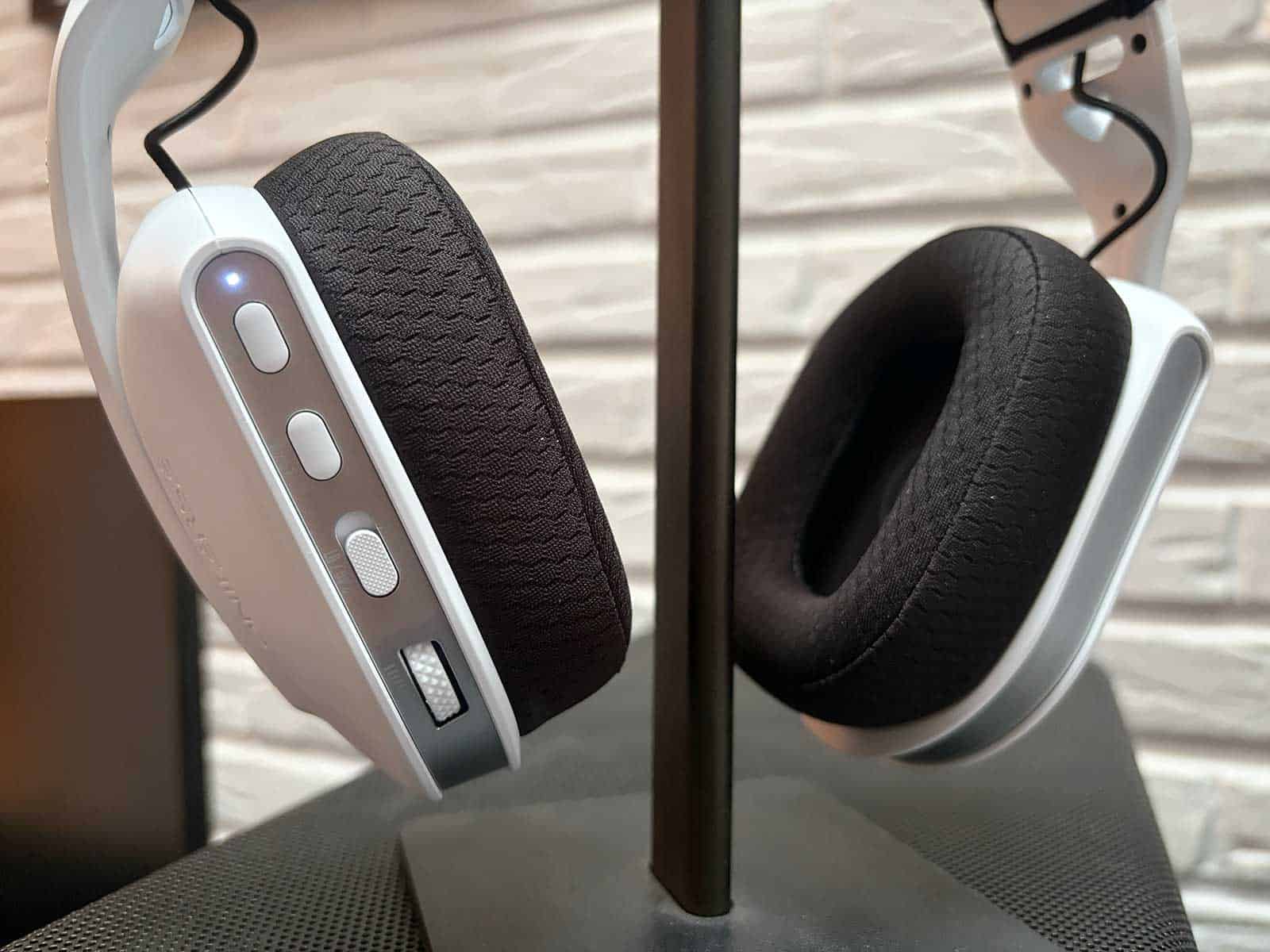
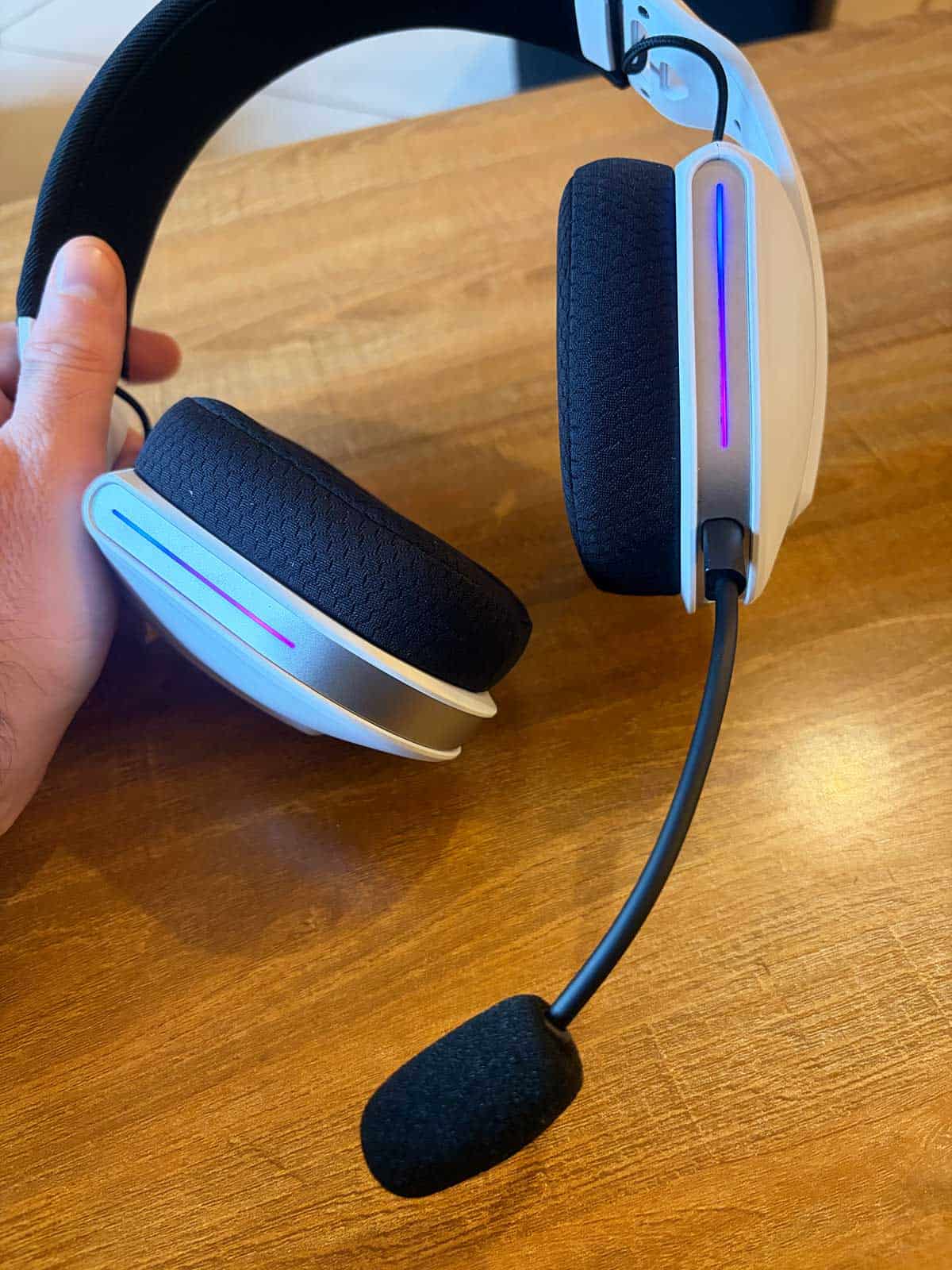
On the aesthetic front, Oniverse leans into color with five finishes, ranging from understated Eclipse Black to the flashier Plasma Sunset, accented by an LED strip. Minimalists can breathe easy, though—the lighting doesn’t look like a walking Christmas tree. It’s just a subtle touch of RGB that actually looks pretty sharp. As for the controls, everything falls naturally under your fingers: the buttons and volume wheel sit on the left earcup, letting you tweak audio levels without digging through system menus or companion apps. That’s a practical touch that really pays off the moment you start hopping between different devices.
Performance and Everyday Use
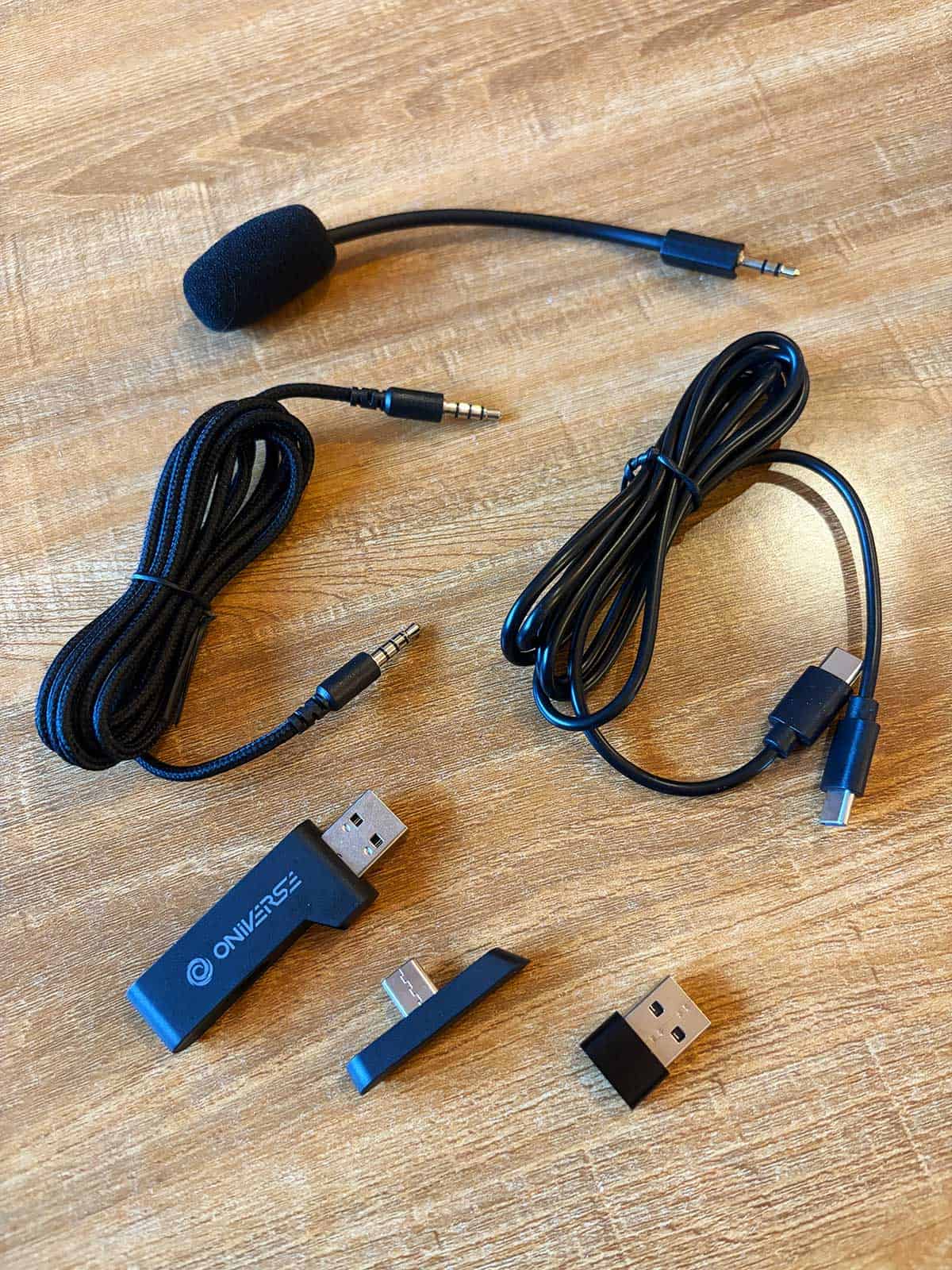
And hopping between devices is where the Oniverse Polaris truly shines. Thanks to its 2.4 GHz USB-C dongle, the headset hooks up seamlessly to a PS5, PC, or Switch with a rated 22 ms latency and a 10-meter (33-foot) range. Bluetooth steps in for your phone, and the 3.5mm jack acts as a reliable backup the day the battery finally calls it quits. Triple connectivity on a headset at this price is rare enough to deserve a real shoutout.
Let’s talk sound, handled here by 40 mm drivers. Audio output is solid and punchy enough for action games, though it doesn’t pretend to be anything it’s not. If you’re hunting for audiophile-grade acoustics, look elsewhere—the Polaris plays squarely in the “budget-chic” league. Still, it does offer virtual 7.1 surround sound, which works nicely, though it’s exclusive to PC via Windows drivers. On PS5, that’s hardly an issue: Sony’s Tempest 3D Audio is handled natively by the console and works great with the Polaris, while on Switch 2 you drop down to standard stereo.
For voice chat, the Polaris includes a detachable ~15 cm (6-inch) boom mic with a pop filter, plus an internal microphone for taking calls on the go. In practice, you just pull off the boom arm and head out with the headset on—without anyone on the train mistaking you for a McDonald’s drive-thru employee. During my online sessions, my squad’s feedback was unanimous: my voice came through crisp and clear, with zero cutouts.
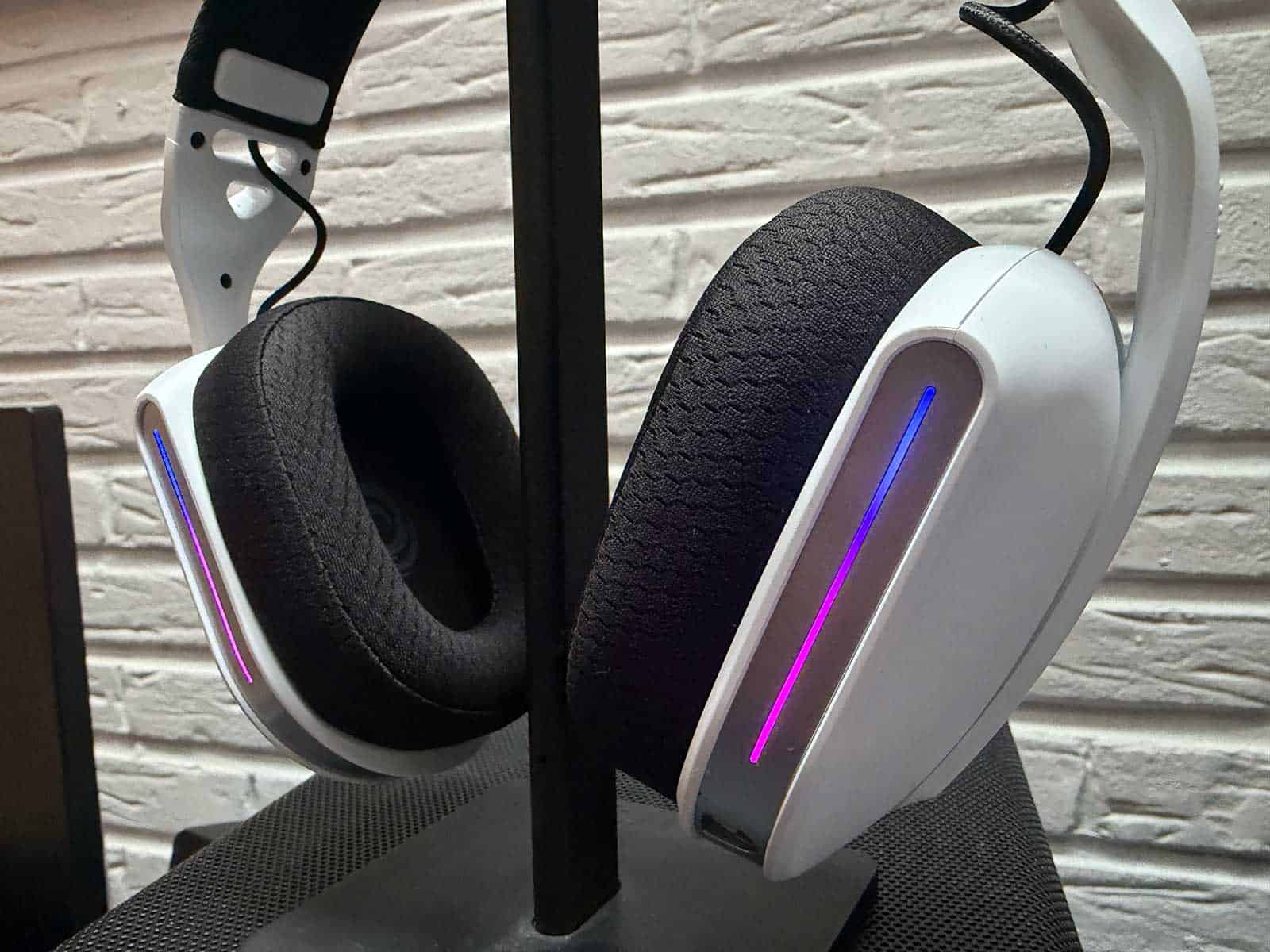
Then there’s battery life, and here the Oniverse Polaris makes up for the Starion controller’s shortcomings by delivering up to 33 hours with the LED lighting enabled. That’s easily enough to get through a full week of gaming without stress, putting plenty of pricier headsets to shame. In real-world use, the verdict is overwhelmingly positive: after a solid week of heavy play across multiple platforms, I didn’t have to plug it in to charge once.
Against the Competition
On PS5, the obvious rival remains Sony’s official Pulse Elite headset—built specifically for the PlayStation ecosystem, but sold for noticeably more money. The Oniverse Polaris doesn’t compete in the same league on pure sound fidelity, yet it scores major points where Sony plays it stingy: cross-platform compatibility, a backup 3.5mm jack, a detachable mic, and generous battery life. For anyone bouncing between console, PC, and smartphone, the Polaris is simply the more versatile pick.
Oniverse Polaris Review: The Verdict
For around €60 (~$65), the Oniverse Polaris nails all the fundamentals: low weight, triple connectivity, a detachable mic, and dependable battery life. Sure, it won’t blow audiophiles away, and its virtual 7.1 mode stays locked to PC—even if the PS5 covers that base with its own 3D Audio. Still, at such an aggressive price point, it already punches well above its weight. I happily recommend it to budget shoppers, multiplatform gamers, and anyone looking for a reliable wireless headset without breaking the bank. What about you—is 3D spatial audio a must-have, or does good old stereo still do the trick?
FAQ
Is the Oniverse Polaris compatible with the PS5?
Yes. It connects wirelessly to the PS5 using its 2.4 GHz USB-C dongle, or wired via the 3.5mm audio cable. Its virtual 7.1 surround is PC-only, but PS5 3D Audio works normally since it’s processed directly by the console.
What is the battery life of the Oniverse Polaris?
Oniverse rates it for up to 33 hours of battery life with the LED lighting turned on. Once the battery runs dry, you can keep using the headset wired over the 3.5mm jack.
Is the Oniverse Polaris microphone detachable?
Yes, the main ~15 cm (6-inch) boom mic detaches cleanly and includes a foam pop filter. A built-in microphone takes over for voice calls when you’re on the move.